New Caledonia

New Caledonia

Pacific Ocean

Repository: 15 items

New Caledonia document repository

The geopolitical ecology of New Caledonia: territorial re-ordering, mining, and Indigenous economic development

2020
Document

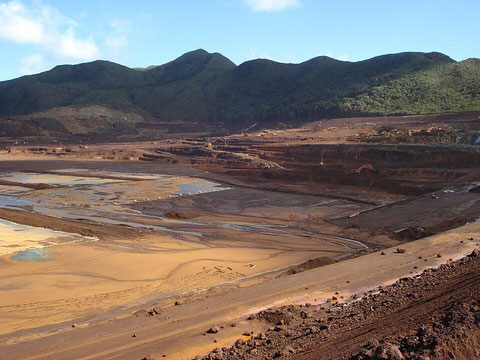
Abstract In the French Pacific territory of New Caledonia, conflict and difference between Indigenous Kanak people and European settlers has existed at least since the 1850s. We interrogate the geopolitical ecology of these islands, which is deeply wedded to natural resource extraction, is instrumentalized in political debate, power struggles, conflict, and the mining sector. Territoriality, including changes to political borders and access to land, has promoted the interests of the key actors in shaping the future of the islands. Violence in the 1980s was followed by the Matignon Accords (1988) and three provinces were established (North, South, Loyalty Islands). The South Province is governed by a party loyal to France, and the others are in the hands of the Indigenous Kanak independence movement seeking full decolonization and independence. The strengthened regional autonomy that emerged from the creation of provinces has permitted the Kanak-dominated ones to control certain political competencies as well as to guide economic development much more strongly than in other settler states, notably through a large nickel mining project in the North Province. Provincialization has not diminished ethnic divisions as French interests hoped, as signaled by voting in the close-run but unsuccessful 2018 referendum on independence from France. We explore the ironies of these efforts at territorial re-ordering, which are layered on significant spatial and racial disparities. Re-bordering has enabled resurgence of Kanak power in ways unanticipated by the architects of the Accords, but without a guarantee of eventual success. Key Words: New Caledonia, geopolitical ecology, politics of mining, decolonization, Kanak identity
The “Metal-Energy-Construction Mineral” Nexus in the Island Metabolism: The Case of the Extractive Economy of New Caledonia

2020
Journal Article

The concept of island metabolism strives to implement the principles of social ecology at the island scale. It is, therefore, a question of analyzing the flows of materials and energy passing through these territories, as well as the resource base needed to sustain their activities. We propose to develop a nexus approach to the New Caledonian island metabolism to understand the interactions between biophysical structures and societal, as well as economic, activities. Metals, construction minerals, and energy are good symbols of economies based on the extraction of non-renewable resources. This is why, in this article, we sought to investigate how the “metal-energy-construction mineral” nexus can affect the resilience and metabolic sustainability of the extractive island of New Caledonia. We carried out the Material and Energy Flow Analysis (MEFA) of each nexus subsystem for 2016 and of the nodes of interdependence. We also interrogated the role of importing countries because the island’s metabolism is dominated by the nickel extraction industry. Indeed, the metabolic profile of this island corresponds to the one of a supply territory for other consumption territories. The latter outsource the impacts of their own consumption to New Caledonia. Finally, based on interviews with economic stakeholders, we studied the potential building blocks for the emergence of an industrial symbiosis in the nexus. Keywords: island metabolism; MFA; nexus approach; industrial waste; metabolic profile

Nickel mining in northern New Caledonia - a path to sustainable development?

2018
Journal Article

Mining is associated with unsustainable development pathways and frequently, local communities are affected by environmental degradation and social upheavals. In many developing countries, its macroeconomic effects are negative and promote conflict. At the same time, the resource sector is an engine of economic growth. The Koniambo nickel project in the French overseas territory of New Caledonia is unusual compared to other large-scale projects worldwide. Kanak independence aspirations resulted in the Koniambo project, as an ‘instrument’ for their economic and political emancipation from France. The mining operator KNS, a joint venture of the local, Kanak dominated SMSP and the Swiss group Glencore, is taking measures to reduce environmental impacts, privileging local employment and supporting ethical business practices. I examine the success of KNS operations through its sustainable development report and based on several years of fieldwork in and around the site. I discover a mixed picture. Alternative economic practices of benefit to the Kanak population are less than successful, and social disparities within indigenous communities are widening. Customary land is being commodified and developed, driven by neoliberal goals. Like other large-scale mining companies in New Caledonia, KNS profits from tax exemptions. To contribute to a true sustainable development with less ‘green-washing’, Koniambo needs to provide solidarity-based criteria for subcontracting, and pay appropriate taxes to the New Caledonian administration. The political authorities need to establish a wealth fund for future generations and should initiate economic diversification before dividends from the nickel sector fill its coffers.